Expanded North-East Atlantic Emission Control Area (ECA) Signals Major Operational Impacts for Global Shipping
MEPC 84 Update: Original MEPC post can be found here >
Important Implications
HEC CAN HELP: We can assist owners in assessing the impact of the revised ECA extents and modifying their vessels to support compliance and reliable operation in extended ECA areas.
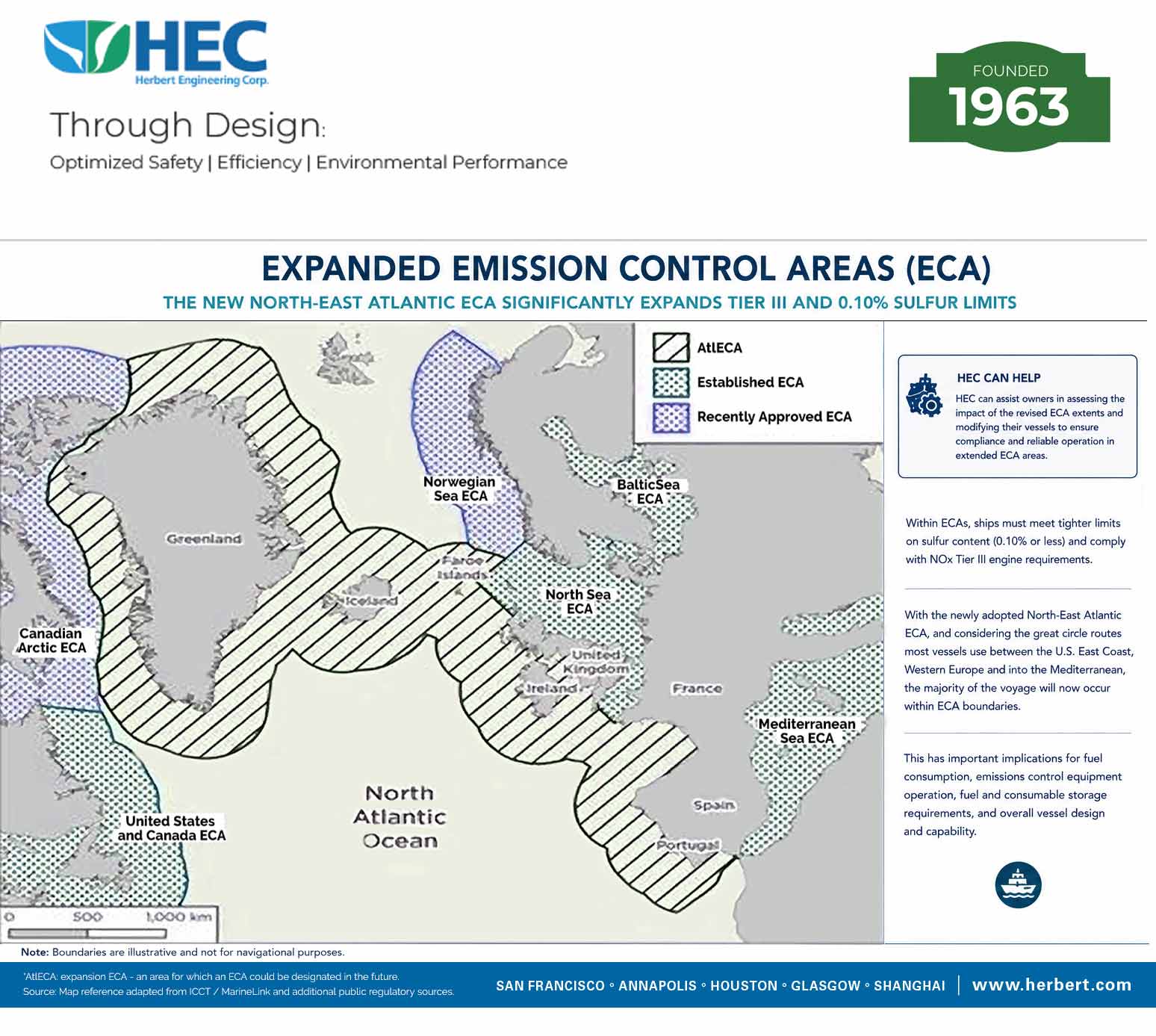
In addition to continued discussions surrounding the IMO’s Net Zero Framework (NZF), another significant outcome from MEPC 84 was the adoption of the expanded North-East Atlantic Emission Control Area (ECA), with compliance requirements taking effect after 1 September 2028.
The expanded ECA will extend stricter emissions requirements across major Atlantic and European trade routes, including many voyages between the U.S. East Coast, Western Europe, and the Mediterranean.
Key requirements within the expanded ECA include:
• Sulfur content limits of no more than 0.10%
• NOx Tier III engine certification requirements
• Extended operation within low-emission operating zones
For many vessels operating along great circle routes, a substantial portion of a voyage may now occur within ECA boundaries.
This creates several operational and design considerations, including:
• Increased consumption of compliant low-sulfur fuel
• Greater operational demand on SCR and EGR systems
• Expanded storage requirements for urea or NaOH consumables
• Potential impacts to fuel tank arrangements and voyage planning
• Modified scrubber operating profiles to maintain higher SOx reduction over extended transits
Some existing vessels may require retrofit modifications or operational adjustments to support extended Tier III operation efficiently and compliantly.
At Herbert Engineering Corp (HEC), we continue to support owners and operators with technical analysis, retrofit planning, emissions-compliance strategies, and vessel-modification solutions as environmental regulations evolve across the maritime sector.
While broader greenhouse gas reduction measures and the Net Zero Framework remain unresolved in the near term, the expansion of ECAs is a real operational shift that owners should start preparing for now.
Note: Image reference and regulatory background adapted from publicly available IMO, MarineLink, ICCT, Clean Arctic Alliance, and DNV materials.
LinkedIn Tags
#MEPC84 #IMO #ECA #Shipping #MarineEngineering #NavalArchitecture #Decarbonization #TierIII #MaritimeIndustry #HEC #EnergyTransition